SMC 2026-10-04
Good morning,
Just in time for Halloween, the American Society of Reclamation Sciences has conjured up a novel approach to educating the public about Acid Mine Drainage (AMD)—what it is, why it matters, and why we need to address the problem.
It could almost be a tailor-made advertisement for our Zero Tailings™ technology, if we had thought of it ourselves.
With that in mind, I’ll be travelling to Seville, Spain, in two weeks to meet up with our own Dr. Paul Miller and attend a major mining conference where one of the topics will be finding solutions to a serious AMD problem in their own backyard.
The Iberian Pyrite Belt, with its long history of mining, contains many millions of tonnes of legacy mine tailings. These tailings continue to generate acidic drainage that finds its way into local rivers and, ultimately, toward the Mediterranean.
Paul will be delivering two presentations during our time in Spain, giving us an excellent opportunity to introduce our work and the potential of Zero Tailings™ to an audience dealing directly with these issues.
We’ll also be participating in a one-day event hosted by the Canadian Embassy in Spain, providing another opportunity to showcase what BacTech is doing and why technologies that address legacy mine waste are becoming increasingly important.
It was yet another week of dumping of our shares, this week RBC took the lead to dump almost 2 million. With that said, I still think we will have the last laugh. Your continued support is appreciated.
Cheers,
Ross Orr
President & CEO
American Society of Reclamation Sciences (ASRS)
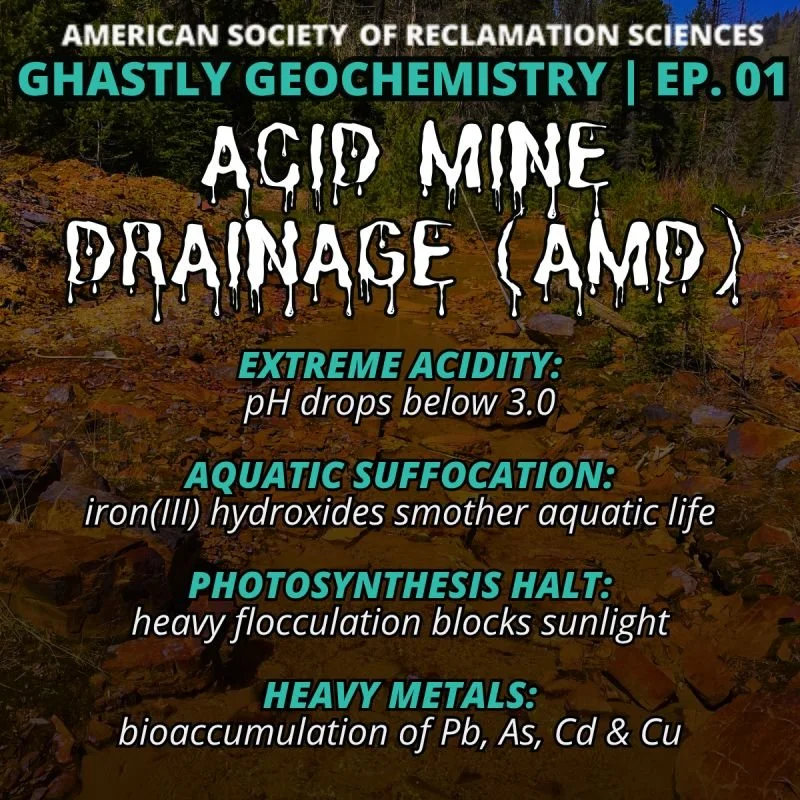
You’ve seen it on our page before--that striking orange hue that screams "TOXIC." But what is actually lurking beneath the surface?... hashtag#GhastlyGeochemistry
When acid mine drainage (AMD) loaded with dissolved metals meets oxygenated surface water, iron oxides precipitate out of solution, staining streambeds a toxic orange. But that eerie color is just the visual front for a far more terrifying geochemical cascade.
💀🟧𝙷̲𝙾̲𝚁̲𝚁̲𝙾̲𝚁̲ 𝙱̲𝙴̲𝙻̲𝙾̲𝚆̲ 𝚃̲𝙷̲𝙴̲ 𝚂̲𝚄̲𝚁̲𝙵̲𝙰̲𝙲̲𝙴̲🟧💀
🔸𝗘𝘅𝘁𝗿𝗲𝗺𝗲 𝗔𝗰𝗶𝗱𝗶𝘁𝘆: AMD can plummet water pH below 3.0. This shift alone is highly lethal to most fish, amphibians, and macroinvertebrates.
🔸𝗚𝗶𝗹𝗹 𝗦𝘂𝗳𝗳𝗼𝗰𝗮𝘁𝗶𝗼𝗻 + 𝗛𝗮𝗯𝗶𝘁𝗮𝘁 𝗕𝘂𝗿𝗶𝗮𝗹: As iron(III) hydroxide precipitates into a fluffy orange-brown sludge known as "yellow boy," it smothers benthic habitat, buries gravel beds, and physically coats fish gills, cutting off oxygen right at the intake.
🔸𝗦𝘂𝗻𝗹𝗶𝗴𝗵𝘁 𝗗𝗲𝗽𝗿𝗶𝘃𝗮𝘁𝗶𝗼𝗻: Heavy flocculation turns water murky, blocking sunlight, halting aquatic plant photosynthesis, and collapsing food webs from the bethic zone, up.
🔸𝗔 𝗧𝗼𝘅𝗶𝗰 𝗛𝗲𝗮𝘃𝘆 𝗠𝗲𝘁𝗮𝗹 𝗖𝗼𝗰𝗸𝘁𝗮𝗶𝗹: AMD acts as a dissolvent, unlocking and unleashing dangerous heavy metals like lead, arsenic, cadmium, aluminum, copper, etc. At low pH, these metals become highly bioavailable and easily absorbed by aquatic organisms.
🔸𝗔𝗾𝘂𝗮𝘁𝗶𝗰-𝘁𝗼-𝗧𝗲𝗿𝗿𝗲𝘀𝘁𝗿𝗶𝗮𝗹 𝗦𝗽𝗶𝗹𝗹𝗼𝘃𝗲𝗿: 𝙽̲𝙾̲𝚃̲ 𝚂̲𝙲̲𝙰̲𝚁̲𝙴̲𝙳̲ 𝚈̲𝙴̲𝚃̲? Well, bioaccumulation doesn't stop in the water. These toxic metals move up the food chain into terrestrial wildlife, livestock, and agricultural systems. For human communities dependent on AMD-impacted watersheds, exposure brings risks of severe organ and neurological damage, nervous system toxicity, and long-term health impacts.
From Alaska to Texas, AMD remains a pervasive threat driven by historic mineral extraction, unmanaged waste rock dumps, leaching tailings, and active discharge from abandoned underground mines and Superfund sites.
Taming this geochemical chaos is a massive hurdle, but it's essential for watershed restoration. ASRS members lead the charge in designing passive treatment systems (like aerobic wetlands, settling ponds, and limestone channels) and similar ecologically engineered technology that safely strip heavy metals out of solution before they reach downstream communities and ecosystems.